The elections this year in Boulder, Colorado has felt quieter than usual in 2025. Our city government has been making steady progress on their goals, with no major policy controversies. Colorado’s statewide budget has come under significant pressure, and the context of chaos flowing from our federal government seems to be in the forefront of most people’s minds.
In full disclosure, I am very involved in local and statewide politics. I serve on leadership for Boulder Progressives and Better Boulder, and am a co-founder of Colorado Community Research, a Boulder-based polling and political consulting company. Since 2021, I’ve been more involved than ever — working to end discriminatory occupancy limits statewide, running a campaign to move Boulder’s municipal elections to even years, helping pass the city’s library district ballot measure, proposing and supporting a successful effort to set fair wages for city council members, and helping to pass statewide housing reforms. I’ve interviewed or talked with about a dozen candidates running for city council or school board this year as parts of various endorsement processes.
I’ve written a voter guide for every general election in Boulder for the past ten years. I want to start with a thank you to local journalists: news and opinion writers at the Boulder Daily Camera, Boulder Reporting Lab, Richard Valenty, and KGNU Radio. Without their dedication and terrific reporting, guides like this wouldn’t be possible. I’ve also linked to great reporting from Colorado Public Radio, Colorado Sun, Colorado Newsline, Colorado Chalkbeat, The Denver Post and other outlets. Consider subscribing!
If you’re new to my voter guide this year, welcome! A number of viewers may have previously read the Boulder Weekly’s voter guide. Unfortunately, over the summer, the Boulder Weekly fired nearly all of its staff and is no longer printing the paper or creating new stories on its website. However, they have finally posted a voter guide on their website only (no print edition). You can read more reporting from Corey Hutchins here: Boulder Weekly implodes. ‘The newsroom is gone,’ fired editor says. Paper’s future uncertain. That being said, I am happy to have you! Enjoy.
November 4th, 2025 General Election in Boulder, Colorado
City of Boulder Council Candidates – Lauren Folkerts, Matt Benjamin, Nicole Speer
I am voting Lauren Folkerts, Matt Benjamin, Nicole Speer, and a possible vote for a fourth candidate. Boulder’s city leadership has changed a lot since the 2021 election, when these three candidates were first elected. Boulder’s previous City Councils were famously NIMBY:
Boulder, Colorado's city government was a different place back in 2020. so famously NIMBY that Boulder City Council made an appearance in "Better Call Saul":
Under previous city council’s, Boulder was largely the City of No — no action to address our housing crunch, little change to improve transportation, and a city with a cost of living that continued to rise and push out families and less-privileged people. These are big challenges and I won’t pretend that they could be fixed in just four years. But in so many ways, I believe our city is moving in the right direction to tackle our biggest challenges.
Lauren Folkerts, Matt Benjamin, and Nicole Speer were leaders on the most accomplished city councils in decades:
Continued reduction in sales tax revenue and impacts from federal spending cuts
Potential loss of federal transportation funding
Continued demographic shift to older and wealthier populations
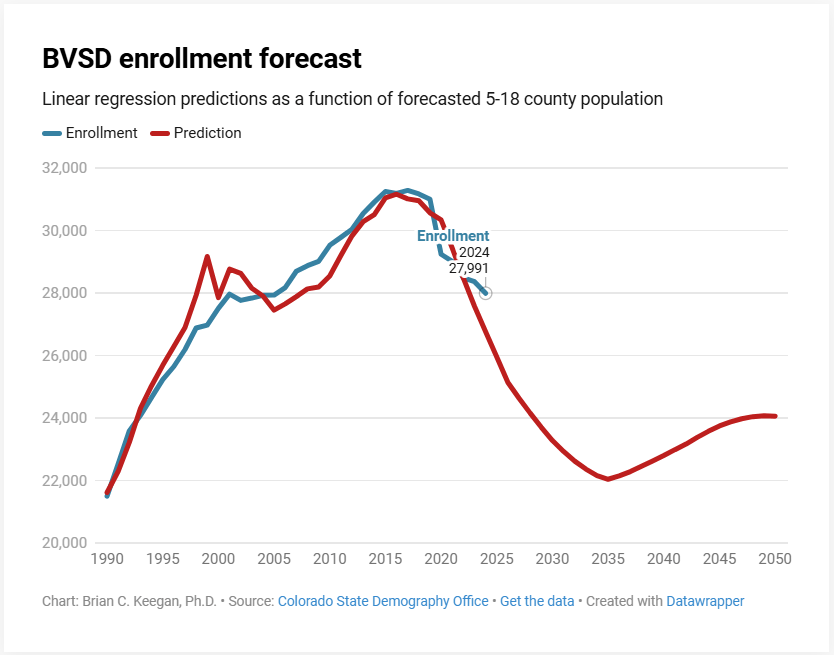
Continued steep drops in school enrollment:
A chart of BVSD’s enrollment forecast by CU Boulder Professor Brian C. Keegan, Ph.D.
What organizational endorsements do these Boulder City Council Candidates have?
Should you vote for a fourth candidate, and who might you consider?
I’m undecided on voting for a fourth candidate, so I’ll outline how I’m thinking about things. Of the other candidates in the race, I can put them into two categories:
Candidates backed by conservative-leaning groups:
Mark Wallach
Jennifer Robins
Rob Kaplan
Candidates with limited group backing and fundraising:
Rachel Rose Isaacson
Maxwell Lord
Montserrat Palacios
Rob Smoke
Aaron Stone
Mark Wallach
Mark Wallach is an incumbent city council member first elected in 2019. Mark has relatively strong support in the community from more conservative circles, and will likely be re-elected in 2025. From a policy perspective, he has opposed nearly all of the accomplishments of the current council I listed above, along with some other notable positions:
Opposed a measure to establish Boulder’s public library district
Opposed a measure to move Boulder’s local elections to even years
Opposed a measure to set future council’s pay based on the median city wage
Opposed supporting the groundbreaking statewide housing bill in 2023 and elements in 2024
Opposed Colorado’s law to end discriminatory housing occupancy limits statewide
Opposed Boulder’s transportation maintenance fee to improve our city streets, paths, and sidewalks
Opposed allowing duplexes on transit corridors
Many people in the community appreciate Mark’s willingness to dig into details around policy and budgets, which I believe he will continue to do well if re-elected. It’s difficult for me to vote for someone who has been so oppositional to many of the important changes I have supported or worked on directly.
Jennifer Robins
Jenny Robins is a candidate who ran previously in 2023. I have appreciated that Jenny has considered running again, and got the opportunity to interview her several times during the election cycle, which was helpful. I think Jenny is a solid candidate, although generally her positions in general are a bit more conservative that what Boulder needs. We need transformational thinking to keep making progress on our housing challenges. We need to continue to move away from a transportation system that favors private car usage. We need to be aggressive on worker protections and increasing wages. We need to push forward on our progress to make Boulder a more inclusive community. I think Jenny is capable and qualified for the job, but I am looking for candidates wanting to make systemic change.
Rob Kaplan
Rob Kaplan is a first-time candidate and I’ve had the opportunity to talk with him for several hours total on several occasions during the election cycle. Rob is a relative newcomer to local politics, and I have appreciated him diving in — meeting with as many people as possible, learning, and wrestling with new ideas. Based on his experience and my interactions, I get the sense that Rob is practical and cautious, but wanting to listen and open to being persuaded.
While Rob is not quite as progressive as typical candidates I support, he’s taken some positive positions that resonate with me. In fact, he hasn’t been endorsed by Boulder Elevated, perhaps because they think he is *too* progressive. Rob’s experience as a firefighter and a blue collar worker in the city, as well as his current experience as a father of a student in CU would be very relevant to a member of Boulder City Council. I appreciate his approach and his demeanor, which will be some of his strongest assets if he gets elected.
Rachel Rose Isaacson
Rachel Rose Isaacson is a candidate that brings a different perspective from all of the candidates I’ve discussed so far. She is younger and has a lot of energy to center the needs of a younger generation in Boulder — representation that is strongly needed on city council. I think Rachel has a lot of potential, although I have struggled to get a sense that she is ready to lead on tackling Boulder’s biggest challenges. In conversations about housing, transportation, the budget, and other areas, I think Rachel needs more focus on what policy changes she would lead on to make the change she hopes to see. I think a strong combination of honing this vision and working to learn how to effect change in a city government would help Rachel become a stronger candidate.
Maxwell Lord
Maxwell Lord is an interesting candidate. He’s also one of the younger candidates running, which I appreciate. It’s very difficult to start from a limited level of involvement to become an effective candidate quickly. From my perspective, Max has not been particularly supportive of the city’s direction on housing policy or transportation, although I did not find his critiques very compelling. In general I think I’m aligned with Max’s values, but I think he needs more clarity on the kind of change he wants to see and to figure out how to effect that change.
So how do you decide if you want to vote for a fourth candidate?
Based on what I’ve outlined so far, I strongly support Lauren Folkerts, Matt Benjamin, Nicole Speer for the work they have done and will continue to do. Mark Wallach, the fourth incumbent, will likely be re-elected, as the other candidates in the race are unlikely to have higher levels of support than Wallach. My challenge in voting for a fourth candidate is that it may displace one or more of the three candidates that I would most like to win. But maybe you see things differently. Good luck!
Boulder Valley School District Director District E – Jeffrey Lowe Anderson
I am voting for Jeffrey Lowe Anderson. As the one contested BVSD school district race, I found the race to be challenging to make a decision — both candidates have significant qualities that make either a decent choice to vote for. I will outline the main criteria I looked at:
Participation at the BVSD forum:
The BVSD forum put on by the League of Women Voters Boulder County is a really helpful resource for policy questions and understanding more about the candidates. You can watch the forum here:
Rocky Mountain Equality is a long-time LGBTQ+ advocacy organization. They have a helpful questionnaire for candidates in the 2025 school board elections.
Position on state issues LL and MM (Colorado school meals):
Both candidates strongly support LL and MM, which is a terrific program that provides meals for all kids in BVSD public schools.
Endorsements:
I think the endorsements are significant in this race. Both candidates are endorsed by Rocky Mountain Equality. While Deann Bucher has been endorsed by BVEA / CEA (teachers’ union — for context, Deann is a longtime teacher in BVSD — she retired from the district in 2020 and is currently teaching part-time at a private school), I don’t see any other publicly listed endorsements for her candidacy as of October 12th. While Jeffrey Anderson has not been endorsed by the teachers’ union, he has been endorsed by a number of current and former school board members, a few other notable elected officials, and several notable community members.
“BVSD has made incredible strides in equity, transparency, and accountability over the past several years. This is due in large part to the leadership and vision of our Superintendent, Dr. Rob Anderson. In the race for District E, it is most port to me to select a candidate who supports our superintendent’s vision and who puts a premium on the importance of public education, that candidate is Jeff Anderson. I believe he is best-suited to navigate through this difficult time when our public schools are under enormous threat from the federal government, and to ensure that we stay the course on the important work that is underway.” -Lisa Sweeney-Miran, Former Boulder Valley School District Board of Education Vice-President
(Full disclosure — Lisa is my wife and a member of Boulder Progressives’ Executive Team)
Boulder Valley School District Director District F – Ana Temu Otting (unopposed)
I am voting for Ana Temu Otting. I have been impressed with Ana in the forums and responses I’ve seen this year. I think she will have a positive impact for many reasons, and adding a bilingual woman of color to the BVSD board will be a good outcome here.
Proposition LL: Without raising taxes, may the state keep and spend all revenue generated by the 2022 voter-approved state tax deduction limits on individuals with incomes of $300,000 or more and maintain these deduction limits in order to continue funding the healthy school meals for all program, which pays for public schools to offer free breakfast and lunch to all students in kindergarten through twelfth grade?
Proposition MM: SHALL STATE TAXES BE INCREASED BY $95 MILLION ANNUALLY BY A CHANGE TO THE COLORADO REVISED STATUTES TO SUPPORT ACCESS TO HEALTHY FOOD FOR COLORADO KIDS AND FAMILIES, INCLUDING THE HEALTHY SCHOOL MEALS FOR ALL PROGRAM, AND, IN CONNECTION THEREWITH, INCREASING STATE TAXABLE INCOME ONLY FOR INDIVIDUALS WHO HAVE A FEDERAL TAXABLE INCOME OF $300,000 OR MORE BY LIMITING ITEMIZED OR STANDARD STATE INCOME TAX DEDUCTIONS TO $1,000 FOR SINGLE TAX RETURN FILERS AND $2,000 FOR JOINT TAX RETURN FILERS FOR THE PURPOSES OF FULLY FUNDING THE HEALTHY SCHOOL MEALS FOR ALL PROGRAM TO CONTINUE PAYING FOR PUBLIC SCHOOLS TO OFFER FREE BREAKFAST AND LUNCH TO ALL PUBLIC SCHOOL STUDENTS WHILE ALSO INCREASING WAGES FOR EMPLOYEES WHO PREPARE AND SERVE SCHOOL MEALS, HELPING SCHOOLS USE BASIC, NUTRITIOUS INGREDIENTS, INSTEAD OF PROCESSED PRODUCTS, AND ENSURING THAT COLORADO GROWN AND RAISED PRODUCTS ARE PART OF SCHOOL MEALS; SUPPORTING THE SUPPLEMENTAL NUTRITION ASSISTANCE PROGRAM (SNAP) THAT HELPS LOW-INCOME COLORADO FAMILIES AFFORD GROCERIES; AND ALLOWING THE STATE TO RETAIN AND SPEND AS A VOTER-APPROVED REVENUE CHANGE ALL ADDITIONAL TAX REVENUE GENERATED BY THESE TAX DEDUCTION CHANGES?
YES / FOR. Proposition LL is a measure that would retain funds from the original Proposition FF to provide healthy school meals, originally passed by voters in 2022. Proposition MM is a measure that will expand the original program to fully cover the goals of the original program, which includes funding for higher-than-expected participation, increasing wages for food workers, and accounting for inflation experienced in the past several years.
There’s not much new to say about Proposition LL and MM, so I’ll summarize my position and give a few highlights:
The original idea behind Proposition FF — reducing tax reductions for high-income households, and providing free meals for all public school students — has been and is still one of the most progressive statewide ballot issues in recent memory.
“Research shows what we’re seeing firsthand: students who have consistent access to healthy meals perform better academically, have improved attendance, and experience fewer health issues. Receiving a school lunch reduces poor health by at least 29% and is linked with fewer visits to the school nurse & reductions in behavioral problems. These benefits don’t just help kids today; they prepare them for brighter futures.” – Healthy School Meals for All: A Smart Investment in Colorado’s Kids
On the revenue side, here is how tax deductions would change for high-earners in Colorado to fund healthy school lunches for kids:
OPEN SPACE SALES AND USE TAX EXTENSION AND REVENUE CHANGE WITH NO INCREASE IN ANY COUNTY TAX, SHALL THE COUNTY’S EXISTING 0.15% OPEN SPACE SALES AND USE TAX BE EXTENDED IN PERPETUITY FOR THE PURPOSES OF ACQUIRING, IMPROVING, MANAGING, AND MAINTAINING OPEN SPACE LANDS AND OTHER OPEN SPACE PROPERTY INTERESTS, INCLUDING AGRICULTURAL OPEN SPACE; AND SHALL THE REVENUES AND THE EARNINGS ON THE INVESTMENT OF THE PROCEEDS OF SUCH TAX CONSTITUTE A VOTER-APPROVED REVENUE CHANGE; ALL IN ACCORDANCE WITH BOARD OF COUNTY COMMISSIONERS’ RESOLUTION NO. 2025-036?
Yes / For the Measure. Boulder County and the City of Boulder have long had a commitment to preserving natural landscapes, wildlife habitats, and outdoor recreation areas that has shaped both our quality of life and our local identity.
That said, we’ve now reached a point where much of the open space that made sense to acquire has already been acquired. The challenge now is no longer one of expansion, but of managing the amenity that we have. We are increasingly in maintenance mode — managing what we already own, making strategic purchases and trail connections where it makes sense, rather than pursuing large-scale additions.
In general, I think a permanent extension of the open-space sales tax makes sense, but I believe it’s time for Boulder County and the City of Boulder to rethink how we use dedicated open-space taxes. Instead of reflexively renewing them as-is, we should explore shifting or diversifying their purposes — to include broader public and environmental needs, such as climate resilience, wildfire mitigation, or shared public realm improvements as part of the focus on how the funds are spent.
We’ve already seen this evolution in the City of Boulder’s proposed Public Realm Tax in 2025 (which was unfortunately deferred to a future year). I would like to see more leadership and courage from Boulder County officials willing to reimagine open space funding for the next generation, not just renew what’s been done before.
I will vote Yes on Issue 1A, but with the clear hope that future measures will better reflect a more balanced, forward-looking vision for Boulder County’s natural and public spaces.
MENTAL AND BEHAVIORAL HEALTH SALES AND USE TAX AND REVENUE CHANGE
SHALL BOULDER COUNTY TAXES BE INCREASED $15 MILLION ANNUALLY (FIRST FULL FISCAL YEAR DOLLAR INCREASE IN 2026) BY IMPOSING AN ADDITIONAL SALES AND USE TAX FOR THREE YEARS OF 0.15% FOR THE PURPOSE OF ADDRESSING UNMET NEEDS OF YOUTH, ADULTS, FAMILIES, UNHOUSED INDIVIDUALS, AND OLDER ADULTS IN BOULDER COUNTY WITH OR AT RISK OF MENTAL HEALTH AND SUBSTANCE USE DISORDERS BY PROVIDING MENTAL HEALTH CRISIS SERVICES; SUICIDE PREVENTION AND INTERVENTION; MENTAL HEALTH AND SUBSTANCE USE PREVENTION, TREATMENT, AND RECOVERY; TREATMENT SERVICES FOR UNHOUSED INDIVIDUALS; AND ASSISTANCE FINDING APPROPRIATE SERVICES THROUGH COMMUNITY-BASED ORGANIZATIONS, GOVERNMENTAL ENTITIES, AND OTHER OPTIONS; AND SHALL THE REVENUES AND THE EARNINGS ON THE INVESTMENT OF THE PROCEEDS OF SUCH TAX, REGARDLESS OF AMOUNT, CONSTITUTE A VOTER-APPROVED REVENUE CHANGE; ALL IN ACCORDANCE WITH BOARD OF COUNTY COMMISSIONERS’ RESOLUTION NO. 2025-038?
Yes / For the Measure. Local elected officials across Boulder County have looked for a permanent mechanism to support mental health services for several years. Across our community — among youth, adults, families, and unhoused individuals — the demand for accessible, effective mental health services far outpaces current resources. The pandemic deepened existing gaps, and while temporary federal support helped fill them, that support is now disappearing. Boulder County Issue 1B proposes a three-year funding mechanism to continue and lightly expand existing services while building support for a more permanent plan.
Starting in 2023, Boulder County used American Rescue Plan Act (ARPA) funds to strengthen local mental health and social resilience programs. Those funds were awarded to schools, community nonprofits, and outreach programs as awarded as community equitable access grants:
El Centro AMISTAD
Boulder Valley School District
Emergency Family Assistance Association (EFAA)
OUR Center
OUT Boulder County
Rise Against Suicide
St. Vrain Valley Schools
Sister Carmen Community Center
TGTHR
Ballot Issue 1B offers one path forward by creating a dedicated funding stream for mental and behavioral health services.
It is clear that the county needs this revenue to sustain mental health programs already in place. But it is unclear how much money will be available for new programs. The resolution does not specifically address a critical gap in our system: residential and long-term treatment for people with severe mental illness and addiction. Without that infrastructure, our community will continue to see homelessness, overcrowded jails, overburdened emergency rooms, and needless suffering in our streets.
Issue 2A: COMMUNITY, CULTURE, RESILIENCE, AND SAFETY (CCRS) TAX EXTENSION (TABOR) WITHOUT RAISING ADDITIONAL TAXES, SHALL THE EXISTING COMMUNITY, CULTURE, RESILIENCE, AND SAFETY SALES AND USE TAX OF 0.3 PERCENT, INITIALLY SCHEDULED TO EXPIRE ON DECEMBER 31, 2036, BE EXTENDED IN PERPETUITY, AS A VOTER APPROVED REVENUE CHANGE, WITH THE REVENUE FROM SUCH TAX EXTENSION AND ALL EARNINGS THEREON, STARTING JANUARY 1, 2026, TO BE USED TO BUILD AND MAINTAIN CITY CAPITAL IMPROVEMENT PROJECTS INCLUDING, BUT NOT LIMITED TO: ROADS, PATHS, BIKE LANES, TRAILS, AND SIDEWALK ENHANCEMENTS; RECREATION CENTER RENOVATIONS AND REPLACEMENTS; SNOW AND ICE RESPONSE; PARKS AND PLAYGROUND REFURBISHMENTS; FIRE AND POLICE STATION RENOVATIONS AND REPLACEMENTS; CRITICAL BRIDGE REPLACEMENTS; AND OPEN SPACE TRAIL AND TRAILHEAD IMPROVEMENTS; AND USE UP TO 10 PERCENT OF SUCH TAX REVENUE TO FUND A GRANT POOL FOR NON-PROFIT ORGANIZATION PROJECTS THAT SERVE THE PEOPLE OF BOULDER AND RELATED COSTS INCLUDING GRANT PROGRAM ADMINISTRATION COSTS IN COMPLIANCE WITH TERMS, CONDITIONS, AND TIMING ADOPTED BY THE CITY COUNCIL; AND IN CONNECTION THEREWITH, SHALL THE TAX REVENUES AND ANY EARNINGS FROM THE REVENUES CONSTITUTE A VOTER APPROVED REVENUE CHANGE AND AN EXCEPTION TO THE REVENUE AND SPENDING LIMITS OF ARTICLE X, SECTION 20 OF THE COLORADO CONSTITUTION?
Issue 2B: COMMUNITY, CULTURE, RESILIENCE, AND SAFETY (CCRS) TAX DEBT AUTHORIZATION (TABOR) SHALL CITY OF BOULDER DEBT BE INCREASED UP TO $262,000,000 (PRINCIPAL AMOUNT) WITH A MAXIMUM REPAYMENT COST OF UP TO $350,000,000 (SUCH AMOUNT BEING THE TOTAL PRINCIPAL AND INTEREST THAT COULD BE PAYABLE OVER THE MAXIMUM LIFE OF THE DEBT) TO BE PAYABLE SOLELY FROM THE EXTENSION OF THE COMMUNITY, CULTURE, RESILIENCE AND SAFETY SALES AND USE TAX OF 0.3 CENTS, IF SEPARATELY APPROVED; WITH SUCH DEBT TO BE SOLD AT SUCH TIME AND IN SUCH MANNER AND TO CONTAIN SUCH TERMS, NOT INCONSISTENT HEREWITH, AS THE CITY COUNCIL MAY DETERMINE, AND THE PROCEEDS OF SUCH DEBT AND EARNINGS THEREON BEING USED TO FUND CITY CAPITAL IMPROVEMENT PROJECTS AND NON-PROFIT PROJECTS THAT SERVE THE CITIZENS OF BOULDER PAYABLE FROM SUCH SALES AND USE TAX EXTENSION INCLUDING, AMONG OTHER THINGS: ROADS, PATHS, BIKE LANES, TRAILS, AND SIDEWALK ENHANCEMENTS; RECREATION CENTER RENOVATIONS AND REPLACEMENTS; SNOW AND ICE RESPONSE; PARKS AND PLAYGROUND REFURBISHMENTS; FIRE AND POLICE STATION RENOVATIONS AND REPLACEMENTS; CRITICAL BRIDGE REPLACEMENTS; AND OPEN SPACE TRAIL AND TRAILHEAD IMPROVEMENTS; AND IN CONNECTION THEREWITH, SHALL ANY EARNINGS FROM THE INVESTMENT OF THE PROCEEDS OF SUCH DEBTS CONSTITUTE A VOTER APPROVED REVENUE CHANGE AND AN EXCEPTION TO THE REVENUE AND SPENDING LIMITS OF ARTICLE X, SECTION 20 OF THE COLORADO CONSTITUTION?
Yes / For the Measure. Ballot Issues 2A and 2B are a permanent extension and bond of an existing capital improvements tax that continues Boulder’s investments in the infrastructure and culture. Originally approved by voters in 2014 and renewed in 2017 and 2021, the tax has funded numerous important projects in our community. Funds have helped renovate fire and police stations, improve roads and bike paths, and maintain public spaces across the city. Here are some examples of projects identified from 2026 to 2032 that the city intends to complete upon passage of the CCRS tax extension:
East Boulder Community Center Deep Retrofit and Renovations (2027)
Fire Stations 2 & 4 Replacements (2032)
Civic Area Phase II (2027)
Pearl Street Revitalization (2027)
Streetlight Acquisition (Ongoing)
Additionally, up to 10% of tax revenue has gone to local nonprofits for essential capital projects. A few examples of previously funded projects:
Solar panel installations at the Boulder Jewish Community Center
Renovations at TGTHR’s Source Drop-In Center and Shelter
Renovations at Safehouse Progressive Alliance for Nonviolence
Renovations at Boulder Valley Women’s Health Center
Renovations at the Museum of Boulder
As Boulder has many on-going capital project needs, renewing this tax in perpetuity makes sense for our community.
Please share with anyone to whom this guide might be helpful. Please visit the Boulder Colorado Voter Guide FAQ for more information about this year’s guide.
A reminder that ballots must be mailed no later than October 27th and ballots may be dropped off by 7pm on Election Day, Tuesday November 4th, 2025.
If you’re not a registered voter or you need to update your registration, you can register online now at Go Vote Colorado! (all you need is an updated Colorado driver’s license). If you register now, you will receive a ballot in the mail. Otherwise, you can register and vote through election day.
Questions, comments, or otherwise can be emailed to me Eric Budd at ericbudd@gmail.com or on social media through Bluesky at @ericmbudd.com.
Elections this year in Boulder, Colorado and across the nation are incredibly important. We say that every year. But this year we have candidates and issues who we need to protect democracy and strengthen our communities. I hope you enjoy reading my guide and voting this November.
For more than five years, I’ve written a voter guide for every general election in Boulder. I want to start with a thank you to local journalists Shay Castle (Boulder Weekly), news and opinion writers at the Boulder Daily Camera, Boulder Reporting Lab. Without their dedication and terrific reporting, guides like this wouldn’t be possible. I’ve also linked to great reporting from The Denver Post, Colorado Public Radio, Colorado Sun, Colorado Newsline, Colorado Chalkbeat, Richard Valenty and other outlets. Consider subscribing!
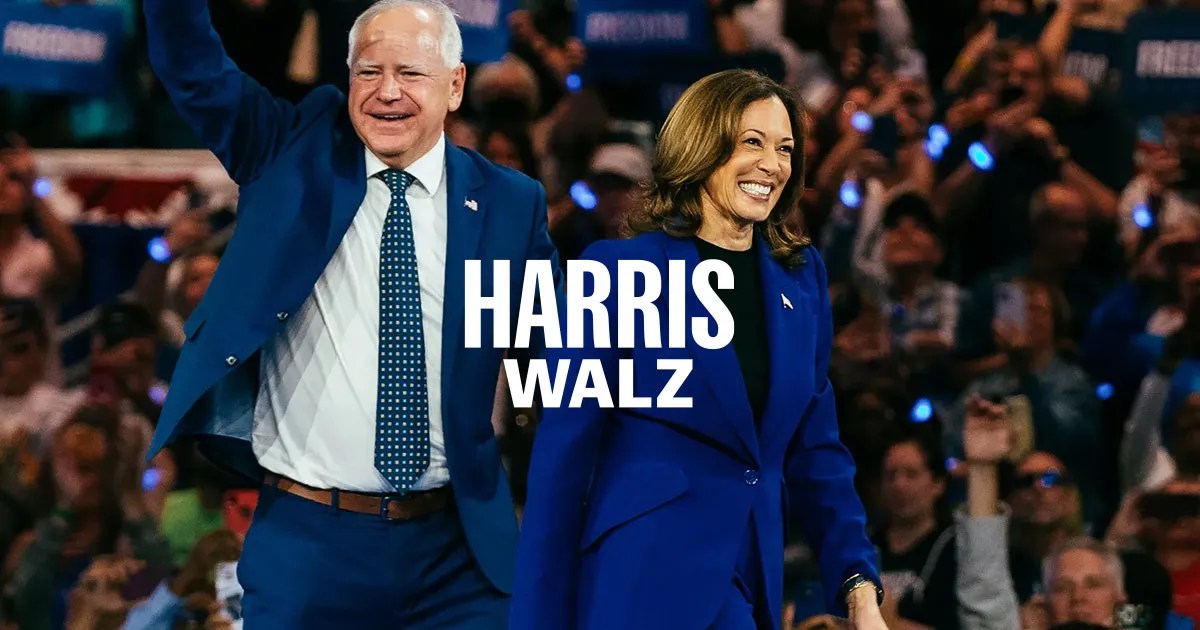
Presidential Electors – Kamala D. Harris / Tim Walz (Democratic)
I am voting for Kamala D. Harris and Tim Walz. I will readily admit that in 2020, Joe Biden was my last-place choice in the Democratic primary. Yet four years later, he not only defeated Trump but passed a number of policies to help the country get past the pandemic, strengthen the economy, and begin to tackle climate change and our other serious challenges.
I’m truly excited for the opportunity to vote for Kamala Harris and Tim Walz. Electing Harris would be a number of firsts, and to have her step into the role of candidate for president just a few short months ago is a daunting task that she has met marvelously. Tim Walz and his record of passing progressive legislation in Minnesota with a single vote margin in the legislature is really encouraging.
I don’t know who’s going to win the election, but I am hopeful that an energized “not going back!” Democratic Party will be just what we need to carry victories in what will likely be another close election.
Representative to the 119th United States Congress – District 2 – Joe Neguse (Democratic)
I am voting for Joe Neguse. Congressman Neguse has been an outstanding champion for Boulder County and Congressional District 2. I’ve appreciated both his leadership and accessibility in the community. I have included some links below to highlight some of the important work and community engagement he’s been doing in the district.
Regent of the University of Colorado – At Large – Elliott Hood (Democratic)
I am voting for Elliott Hood. Elliott is a thoughtful and progressive voice in that will bring strong leadership at for CU Boulder and the University of Colorado system as a whole.
State Senator – District 18 – Judy Amabile (Democratic)
I am voting for Judy Amabile. Representative Amabile currently represents House District 49. Rep Amabile has been a fantastic leader in Boulder.
I’m excited that Judy Amabile is running to represent Boulder and the surrounding areas in the state Senate after four years in the House. A few of Rep Amabile’s accomplishments and work: strengthening our mental health infrastructure and access to mental health services, new laws to address gun violence, and protecting people who are affected by wildfires, among other accomplishments. I strongly support Judy Amabile to continue representing Boulder in the state legislature.
State Representative – District 10 – Junie Joseph (Democratic)
I am voting for Junie Joseph. I first met Junie Joseph when she moved to town in 2018. I was amazed and impressed when she wanted to run for city council the next year. We had just launched Boulder Progressives and were proud to support her candidacy. On the city council, Joseph has aligned members who are pro-housing and making Boulder welcoming to all people.
I look forward to having Rep Joseph re-elected in the state legislature after a successful first term. Full disclosure: I was a member of the HD10 Democratic vacancy committee who participated in the process to select our next state rep in 2022.
State Representative – District 49 – Lesley Smith (Democratic)
I am supporting Lesley Smith. While I no longer live in District 49 and this race is not on my ballot, I wanted to include it in my voter guide as the district overlaps a large section of western / southern Boulder.
I am voting for Jeff Martin, who is running unopposed. Jeff Martin is running off-cycle to fill the remainder of this four-year term after the previous coroner resigned.
Here is a link to the 2024 Colorado Judicial Performance Evaluations. From my research, I see that all judges on Boulder County ballots (District, Appeals, and Supreme Courts) meet the performance standards which Colorado uses to rate a judge’s adherence to standards. For more information, you can click on an individual judge below and read their performance evaluation.
Shall there be an amendment to the Colorado constitution concerning the expansion of eligibility for the property tax exemption for veterans with a disability to include a veteran who does not have a service-connected disability rated as a one hundred percent permanent disability but does have individual unemployability status?
YES / FOR. Amendment G extends an existing policy for veterans to provide broader access to the benefit for those who need assistance but do not qualify as 100% disabled.
"Today, nearly 300,000 Colorado households claim the primary residence homestead exemption, which voters added to the constitution in 2000... it exempts 50% of up to $200,000 in a home’s value from taxes, cutting an average of $590 off the annual tax bill for the median home."
Amendment G: Should more disabled veterans qualify for Colorado’s homestead property tax break? – Colorado Sun
Here’s a table showing the net effect from a change in policy:
An estimated 3,700 veterans in Colorado who are not otherwise able to claim the homestead exemption would be eligible for the exemption under this amendment in property tax year 2025.... Amendment G will increase state spending by $1.8 million in state budget year 2025-26, and similar amounts in future years, to reimburse local governments for lost property tax collections under the measure. With this state reimbursement, money available for local spending will be unchanged.
While most benefits for veterans with disabilities come from the federal government, Colorado’s proposed expansion of benefits through a property tax reduction are reasonable and supportable.
Shall there be an amendment to the Colorado constitution concerning judicial discipline, and in connection therewith, establishing an independent judicial discipline adjudicative board, setting standards for judicial review of a discipline case, and clarifying when discipline proceedings become public?
YES / FOR. According to the Colorado Blue Book, Colorado’s current system for judicial discipline is as follows:
“an independent judicial agency charged with investigating allegations of misconduct against judges, screens and investigates complaints. Members of the commission are appointed by the Colorado Supreme Court and the Governor… the commission can do one of the following: 1) dismiss the complaint; 2) impose private discipline; 3) hold an informal hearing; or 4) initiate formal hearings.”
The proposal for Colorado judicial discipline under Amendment H is as follows:
The biggest change in the new proposal would be that potentially a significant number more cases would be available for public review, including cases where the commission issues an informal punishment. The proposed changes would increase transparency in our judicial system and help give the public more confidence in the system as a whole.
Shall there be an amendment to the Colorado constitution concerning creating an exception to the right to bail for cases of murder in the first degree when proof is evident or presumption is great?
YES / FOR. Amendment I is a referred constitutional measure from the Colorado legislature (HCR24-1002) which passed the legislature with unanimous support in the Senate and near unanimous support in the House. The reason for the bill, as explained by Colorado Public Radio:
The state constitution says that the court must set a bond for defendants in all criminal cases except for “capital cases.” A “capital” case is one potentially punishable by death, which first degree murder was, until 2020, when lawmakers abolished Colorado’s death penalty. That change led the state supreme court to conclude last year that first degree murder no longer meets the criteria for denying bail.
There are significant problems with requiring cash bail for lower level charges, “including harsh consequences of this system for low-income citizens. This system often leads to wealthier defendants getting released, while poor defendants must stay in jail, per The Colorado Lawyer Team. However, in the case of the most serious charges, wealthier residents can still avoid jail time by paying a large bond. The proposal here would restore the law to its pre-2020 status which would give a judge discretion “to deny bail in first degree murder cases when the proof is evident or the presumption is great that the person committed the crime” according to the Colorado Blue Book.
Shall there be an amendment to the Colorado constitution, concerning marriage, and, in connection therewith, specifying that only a union of one man and one woman shall be valid or recognized as a marriage in Colorado?
The result statewide was Yes – 55% to No – 45%. Boulder County largely voted against the measure, Yes – 33.4% to No – 66.6%. But that was the law in Colorado until the United States Supreme Court overturned bans on same-sex marriage with Obergefell v. Hodges (2015). As an aside, I had the distinct honor to hear Jim Obergefell at the Rocky Mountain Equality GAYLA in Boulder in September. Hearing his story about the hard-fought battle in the courts for same-sex marriage was inspirational.
However, since the Trump administration, the US Supreme Court has taken a sharp conservative turn, with three new judges appointed during that time. Most notably the decision on Dobbs v. Jackson Women’s Health Organization (2022) holding that “The Constitution does not confer a right to abortion; Roe v. Wade and Planned Parenthood of Southeastern Pennsylvania v. Casey are overruled; the authority to regulate abortion is returned to the people and their elected representatives,” per SCOTUSblog.
Seeing such significant precedent overturned by the US Supreme Court is extremely concerning. As it relates to Colorado’s same-sex marriage ban, reporting in 2022 indicates that Supreme Court Justice Clarence Thomas “argued in a concurring opinion… that the Supreme Court ‘should reconsider’ its past rulings codifying rights to contraception access, same-sex relationships and same-sex marriage” (Politico) as well as school integration (Vanity Fair).
The reality is that Republican administrations are stripping away hard-fought civil rights that the United States has established over the last 50+ years. It’s long past time that Colorado removes the ban on same-sex marriage from our constitution and protect this right in our state regardless of what happens federally.
Shall there be an amendment to the Colorado constitution concerning the modification of certain deadlines in connection with specified elections?
YES / FOR. Amendment K contains several small changes proposed by Colorado’s state legislature and submitted to the 2024 ballot in SCR24-002 – Modify Constitutional Election Deadlines. Election laws and administration are typically in the state’s constitution, requiring a vote of the people rather than being changeable by our legislators directly. The proposed changes:
Change the date by which initiative petitions must be filed with the secretary of state from at least 3 months before the general election at which they are to be voted on to at least 3 months and one week before that election;
Change the date by which referendum petitions must be filed with the secretary of state from not more than 90 days after the final adjournment of the session of the general assembly that enacted the act on which the referendum is demanded to not more than 83 days after the final adjournment of that session;
Change the date by which the nonpartisan research staff of the general assembly shall publish the text and title of every measure from at least 15 days prior to the final date of voter registration for the election to 45 days before the election; and
Change the period during which a justice of the supreme court or a judge of any other court must file with the secretary of state a declaration of intent to run for another term from not more than 6 months or less than 3 months prior to the general election before the expiration of the judge’s term to not more than 6 months and one week or less than 3 months and one week before that general election.
The main reason for the proposed changes is to allow slightly more time for the election office to process these signatures and measures. The changes benefit both the elections office and the general public as each will have additional time to process the ballot measures and provide the measure information to the public. Importantly, the changes do not reduce the total amount of time allowed to submit measures for voting, but do require petitioners to begin one week earlier than previously.
Shall there be a change to the Colorado constitution recognizing the right to abortion, and, in connection therewith, prohibiting the state and local governments from denying, impeding, or discriminating against the exercise of that right, allowing abortion to be a covered service under health insurance plans for Colorado state and local government employees and for enrollees in state and local governmental insurance programs?
YES / FOR. Most people would not have imagined a need to protect the right to abortion in Colorado before 2022 and the Dobbs v. Jackson Women’s Health Organization overturning a right to abortion at the federal level. Since that time, Colorado legislature passed several laws in 2023 to strengthen access to abortion:
Senate Bill 188 protects patients and providers of abortion and gender-affirming services in Colorado from penalties from other states.
Senate Bill 189 expands health insurance coverage for abortion, sterilization and treatment of sexually transmitted diseases.
Senate Bill 190 prohibits what sponsors deem to be deceptive advertising and the use of abortion “reversal” pills in crisis pregnancy centers.
“Colorado is now among strongest states for abortion protections” from Politico.
Colorado is one of the few states in the region that provide a full range of options for women’s reproductive health — “The Complicated State of Abortion Access Across the Midwest” (Rewire News Group). Here is a map via ABC News outlining the inaccessibility of abortion throughout Southern and Midwestern states:
“Where abortion stands in each state a year since the overturning of Roe v. Wade” – ABC News
I must note that Amendment 79 would protect Colorado’s current statutory laws in its constitution. That means that in Colorado, the right to abortion could only be repealed by another vote of the people rather than a change in state law. However, the Amendment would offer little or no protection from a federal abortion ban, which vice presidential candidate JD Vance has said he “would like abortion to be illegal nationally” (CNN).
You can hear it directly from Imani Gandy:
I explain in 60 seconds why a "national minimum standard on abortion" is the same as a nationwide abortion ban—and how JD Vance is lying to you when he says he doesn't support a nationwide ban.
Amendment 79 is one of the most contested races in Colorado this year. A poll by Colorado Community Research (full disclosure – I am part of this firm) of Congressional District 8 showed in this swing district that “56% of voters supported a right to abortion, with 35% against, and 9% undecided.” Constitutional amendments require 55% to pass, and sentiment overall in the state of Colorado may differ somewhat from this one congressional district, meaning that there’s uncertainty the issue’s passage. As of October 12th, Amendment 79 proponents have spent $8,079,198 while opponents have spent $228,919, making this ballot measure the second most expensive in Colorado in 2024 according to OpenSecrets.
Shall there be an amendment to the Colorado constitution establishing the right to school choice for children in kindergarten through 12th grade, and, in connection therewith, declaring that school choice includes neighborhood, charter, and private schools; home schooling; open enrollment options; and future innovations in education?
NO / AGAINST. People in Colorado have a full set of options for school choice for their children. Amendment 80 would not increase that choice, but rather enable the spending of public school dollars on private education.
Unfortunately, the Colorado Blue Book does not offer any information about the effects of this measure, but the changes would be significant. Most of Colorado’s education policy lies in state law, Title 22. Education (§§ 22-1-101 — 22-107-105) which covers all options listed in the proposed Amendment 80: “neighborhood, charter, and private schools; home schooling; open enrollment options.”
Currently, only public education resources are eligible for state funding. However, if Amendment 80 passes, I would expect that conservative lawyers would argue (potentially successfully) that because Colorado’s state constitution now included a right to charter schools, private schools, and home schooling, that state funding must be allowed for school vouchers that could be used at private schools (including religious private schools).
School vouchers have been touted to increase school choice and to help state budgets. Reporting from Pro Publica suggests otherwise:
In 2022, Arizona pioneered the largest school voucher program in the history of education. Under a new law, any parent in the state, no matter how affluent, could get a taxpayer-funded voucher worth up to tens of thousands of dollars to spend on private school tuition, extracurricular programs or homeschooling supplies… yet in a lesson for these other states, Arizona’s voucher experiment has since precipitated a budget meltdown. The state this year faced a $1.4 billion budget shortfall, much of which was a result of the new voucher spending, according to the Grand Canyon Institute, a local nonpartisan fiscal and economic policy think tank.
School Vouchers Were Supposed to Save Taxpayer Money. Instead They Blew a Massive Hole in Arizona’s Budget. –Pro Publica
Additionally, charter schools currently must adhere to state standards and regulations similar to public schools, and there may be an attempt to weaken the state’s ability to regulate charter schools.
The Amendment 80 was proposed and sponsored to get on the ballot by Advance Colorado, a conservative organization which has opposed charter school accountability:
Advance Colorado’s solution to the “problem” of legislators promoting charter accountability is to put “the right to school choice in the Colorado Constitution” which they assert will give school choice “legal advantages a normal statute does not have.” Over fifty highly paid lobbyists were assigned to kill the charter accountability bill which was publicly opposed by Governor Polis, and was defeated in the House committee.
Mike DeGuire: Why ‘School Choice’ is on the Colorado Ballot This Year — and What You Should Know About It – Network for Public Education
Notably, Governor Polis, who has been a supporter of charter schools, is neutral on Amendment 80:
I generally support this concept, but I’m not sure exactly what a constitutional right would mean legally. Maybe it means that a parent could sue if the state ever tried to ban homeschooling or private school? In that case, it would be good to give parents more rights. On the other hand, it could lead to costly litigation with uncertain outcomes. I am NEUTRAL ON Amendment 80.
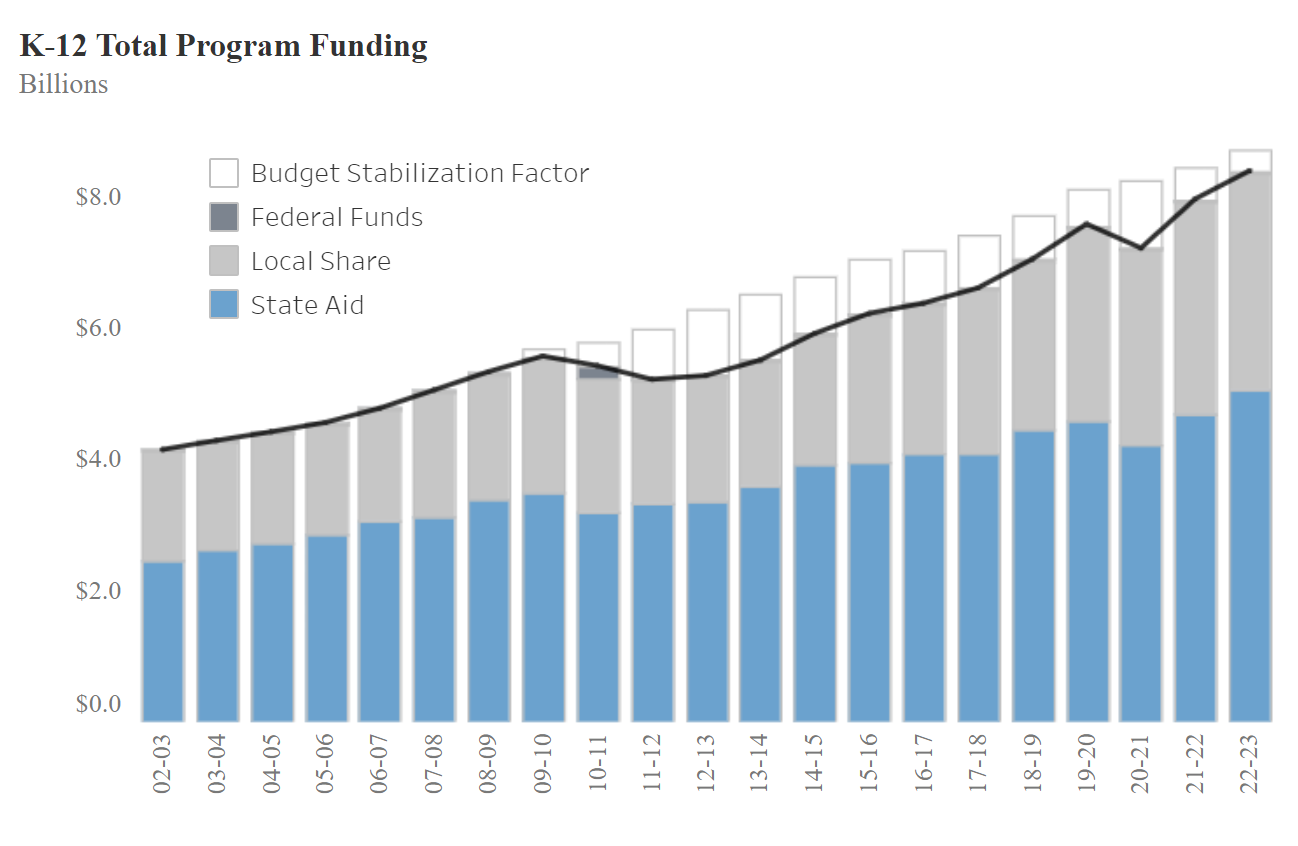
Colorado’s public education funding has already been under pressure from a number of factors — “Colorado lawmakers will have to cut an estimated $900 million in spending or dip into the state’s reserves to balance next year’s budget as tax collections shrink and spending grows,” per the Colorado Sun. Historically, we can also see how Colorado’s Budget Stabilization Factor has decreased funding for public schools since 2010. Amendment 80 will have the effect of undermining public education in Colorado by allowing a diversion of funds from public schools and reducing the state’s ability to hold charter schools accountable.
Without raising taxes, may the state keep and spend all sports betting tax revenue above voter-approved limits to fund water conservation and protection projects instead of refunding revenue to casinos?
YES / FOR. Proposition JJ is a follow-on from Proposition DD from 2019 (which passed 51.4% Yes to 48.6% No) where I supported a Yes vote. Because Colorado has the law Taxpayer Bill of Rights (TABOR), the state must again ask voters to allow the state to retain any revenues greater than what was originally projected. Here is the original ballot question:
SHALL STATE TAXES BE INCREASED BY TWENTY-NINE MILLION DOLLARS ANNUALLY TO FUND STATE WATER PROJECTS AND COMMITMENTS AND TO PAY FOR THE REGULATION OF SPORTS BETTING THROUGH LICENSED CASINOS BY AUTHORIZING A TAX ON SPORTS BETTING OF TEN PERCENT OF NET SPORTS BETTING PROCEEDS, AND TO IMPOSE THE TAX ON PERSONS LICENSED TO CONDUCT SPORTS BETTING OPERATIONS?
… after the legislature passed a bill in 2022 limiting the number of free bets that sports betting operators could offer starting in 2023, the state’s tax revenue rose sharply. In the fiscal year that ended June 30, the $29 million limit was exceeded, according to preliminary data, and it’s expected to be exceeded again in the current and next fiscal years, too.
Proposition JJ: Colorado would be allowed to keep all the sports betting tax revenue it collects – Colorado Sun
I support a Yes vote to extend the current policy and not return tax money to gambling operators. In fact, recent reporting shows that sports gambling has significant externalities and should be taxed higher:
The legalization of sports gambling has led to a significant deterioration in consumers’ financial health, particularly in states that allow online betting, new research shows. “We find a substantial increase in bankruptcy rates, debt collections, debt consolidation loans, and auto loan delinquencies” in states that offer legal sports gambling, researchers from the University of California, Los Angeles and the University of Southern California say in a new working paper. “We also find that financial institutions respond to the reduced creditworthiness of consumers by restricting access to credit.”
Credit Scores Fall and Bankruptcies Climb in States With Legal Sports Gambling – NASDAQ Money
“The FY2023 total was $27 million, sending over twice as much funding to water projects as FY2022 ($12 million). Since its inception in 2020, Proposition DD has produced an over $60 million for investment in healthy rivers.“
SHALL STATE TAXES BE INCREASED BY $39,000,000 ANNUALLY TO FUND MENTAL HEALTH SERVICES, INCLUDING FOR MILITARY VETERANS AND AT-RISK YOUTH, SCHOOL SAFETY AND GUN VIOLENCE PREVENTION, AND SUPPORT SERVICES FOR VICTIMS OF DOMESTIC VIOLENCE AND OTHER VIOLENT CRIMES BY AUTHORIZING A TAX ON GUN DEALERS, GUN MANUFACTURERS, AND AMMUNITION VENDORS AT THE RATE OF 6.5% OF THE NET TAXABLE SALES FROM THE RETAIL SALE OF ANY GUN, GUN PRECURSOR PART, OR AMMUNITION, WITH THE STATE KEEPING AND SPENDING ALL OF THE NEW TAX REVENUE AS A VOTER-APPROVED REVENUE CHANGE?
YES / FOR. Colorado and many states in the US have rising rates of gun violence and deaths. While Colorado passed eight new gun laws in 2024 (Colorado Sun) and more in previous years, we still have more work to do to reduce gun accidents and violence which are a public health crisis.
Proposition KK is a win-win and has two benefits — a taxing mechanism and a funding mechanism that will help reduce gun deaths and injuries. The 6.5% tax on guns, gun parts, or ammunition will provide a small deterrent for gun spending on the margin. More importantly, the relatively small tax will fund important health services that will focus on helping people who are more at risk of gun violence in Colorado.
How gun violence in Colorado hit a 40-year high, explained in six charts – Colorado Sun
Shall there be a change to the Colorado Revised Statutes concerning a prohibition on the hunting of mountain lions, lynx, and bobcats, and, in connection therewith, prohibiting the intentional killing, wounding, pursuing, entrapping, or discharging or releasing of a deadly weapon at a mountain lion, lynx, or bobcat; creating eight exceptions to this prohibition including for the protection of human life, property, and livestock; establishing a violation of this prohibition as a class 1 misdemeanor; and increasing fines and limiting wildlife license privileges for persons convicted of this crime?
YES / FOR. Proposition 127 is a pretty straightforward measure. I wanted to know how prevalent hunting of these animals already was in the state. Colorado Public Radio provided that hunting lynx is already illegal, and gave these stats on bobcats and mountain lions:
As it stands, bobcats may be taken with a furbearer license between the months of December and February, with no limit on the number that can be killed. CPW says an average of 880 bobcats have been harvested per year over the past four years. The total population of the species in Colorado is unknown, but it’s considered widespread and stable.
For mountain lions, hunting is far more tightly controlled. The state’s population is considered stable at between 3,800 and 4,400 animals. To hunt mountain lions, hunters must possess a special mountain lion education certificate on top of the required standard hunter education card. It also requires buying an individual license from the state. Each animal taken also needs to be inspected by CPW, and all edible meat must be prepared for human consumption. Over the past four years, an average of 500 mountain lions were harvested per year.
Proposition 127: Prohibit bobcat, lynx and mountain lion hunting, explained (Colorado Public Radio)
Colorado Public Radio also outlines approximately $450,000 annually in future years for lost revenue to Colorado Parks and Wildlife from hunting licenses, as well as some additional legal expenses and potential small cost savings.
The exceptions to the prohibition of killing for “protection of human life, property, and livestock” is also reasonable. Overall, I think this ballot decision is more decided on one’s personal preferences in the kinds of hunting that should be allowed rather than details of the proposal’s implementation.
Shall there be a change to the Colorado Revised Statutes concerning parole eligibility for an offender convicted of certain crimes, and, in connection therewith, requiring an offender who is convicted of second degree murder; first degree assault; class 2 felony kidnapping; sexual assault; first degree arson; first degree burglary; or aggravated robbery committed on or after January 1, 2025, to serve 85 percent of the sentence imposed before being eligible for parole, and requiring an offender convicted of any such crime committed on or after January 1, 2025, who was previously convicted of any two crimes of violence, not just those crimes enumerated in this measure, to serve the full sentence imposed before beginning to serve parole?
NO / AGAINST. Proposition 128 serves to increase overall incarceration for violent or potentially violent crimes, although it’s unlikely to achieve a goal of reducing crime or reducing the likelihood of people committing crimes in the future. According to the Colorado Blue Book, the current policy is that “a person convicted of certain crimes of violence serve 75 percent of their sentence in prison before being eligible for discretionary parole, minus earned time for progressing in personal, professional, or educational programs.”
Prop 128 doubles down on longer sentences for crimes that are already serious and have long sentences. According to best practices from the National Institute for Justice, “Increasing the severity of punishment does little to deter crime. Laws and policies designed to deter crime by focusing mainly on increasing the severity of punishment are ineffective partly because criminals know little about the sanctions for specific crimes.”
Besides not being a policy improvement, the Colorado Blue Book states that the measure will increase prison costs:
Beginning in approximately 20 years, state spending will increase by between $12 million and $28 million per year due to the measure’s increase in the percentage of prison sentences that must be served.
The evidence we have tells us that Prop 128 would increase incarceration and likely have little impact on reducing violent crime. Instead, Colorado should focus on passing policies that have been shown as successful in reducing future criminal activity, like a bill filed in Colorado that “aims to break the cycle of incarceration by giving people up to $3,000 upon release from prison (Bolts).” Unfortunately, the bill SB24-012 – Reentry Workforce Development Cash Assistance Pilot Program did not pass Colorado’s legislature in 2024.
Shall there be a change to the Colorado Revised Statutes creating a new veterinary professional associate profession, and, in connection therewith, establishing qualifications including a master’s degree in veterinary clinical care or the equivalent as determined by the state board of veterinary medicine to be a veterinary professional associate; requiring registration with the state board; allowing a registered veterinary professional associate to practice veterinary medicine under the supervision of a licensed veterinarian; and making it a misdemeanor to practice as a veterinary professional associate without an active registration?
YES / FOR. As reported by Colorado Public Radio in March, “Colorado faces a serious shortage of veterinarians and vet techs; some solutions may be at hand.”
Rep. Karen McCormick: House Bill 24-1047 is a veterinary technician scope of practice bill that will not only outline all of the things that veterinary technicians are able to do, not necessarily all of them, but to give the people working in the profession, veterinary teams, a better idea of what we should be delegating to veterinary technicians.
Rep. McCormick also introduced HB24-1271 – State Income Tax Credit for Veterinary Professional which would have provided subsidy in the form of “tax credits for eligible veterinary professionals and buyers of a veterinary practice in an underserved area” but failed to pass the legislature. However, Rep. McCormick is also one of the main opponents of Proposition 129.
Proposition 129 would address the supply side of the veterinary staff by reducing the regulatory barriers to becoming a medical veterinary professional. While some critics of the measure insist that the change would reduce the quality of care, the evidence from Colorado State’s movement on the issue is helpful:
Colorado State University is already in the process of setting up a master’s in veterinary clinical care program. It plans to graduate the first class of VPAs in 2027, regardless of whether the initiative passes.
Proposition 129: Establish position of Veterinary Professional Associates, explained – Colorado Public Radio
Colorado State has consistently been one of top veterinary schools in the country, and I trust their ability to navigate this shift in medical care — “U.S. News & World Report ranks CSU the nation’s No. 2 vet school” (CSU)
I think the shift here is driven by divisions of labor we’ve seen before in medicine and other fields which require significant amounts of higher education. For instance, physician’s assistants are an educational model “initially based upon the accelerated training of physicians in the United States during the shortage of qualified medical providers during World War II” per Wikipedia. Such innovations are necessary to address supply shortages in the market.
The significant need is why the Dumb Friends League, an animal shelter in Denver, Colorado since 1910, has endorsed the measure. They have spent $1,016,432 to support the Yes campaign organization “All Pets Deserve Vet Care” according to OpenSecrets as of October 12th. Alternatively, the No campaign “Keep Our Pets Safe” is largely funded by the American Veterinary Medical Association at $1,788,778 according to OpenSecrets as of October 12th
Shall there be a change to the Colorado Revised Statutes concerning state funding for peace officer training and support, and, in connection therewith, directing the legislature to appropriate 350 million dollars to the peace officer training and support fund for municipal and county law enforcement agencies to hire and retain peace officers; allowing the fund to be used for pay, bonuses, initial and continuing education and training, and a death benefit for a peace officer, police, fire and first responder killed in the line of duty; and requiring the funding to supplement existing appropriations?
NO / AGAINST. Proposition 130 would require outsize spending on policing from Colorado’s already constrained budget and has no revenue associated with the measure.
First, it’s important to understand how much of municipal budgets in Colorado go to policing. According to Colorado Newsline in 2020, “Police spending accounts for about a third of the budget in Colorado’s biggest cities.”
The governments of Colorado’s 25 largest municipalities budgeted on average about one-third of their general funds on law enforcement in the 2020 budget year, making police the largest single category of expenditures for nearly every city and town.
Aside from police spending, crime rates have fallen in recent years after a surge during the pandemic, via Colorado Newsline. The data is consistent with decades of dropping crime according to macrotrends. A significant increase in police spending simply isn’t justified at either the state or local level.
Federal Bureau of Investigation – Crime in the U.S. and Colorado –macrotrends
Additionally, Colorado police officers are well paid – averaging $80,823 statewide and $97,065 per year in Boulder, according to Indeed.
Another aspect is a death benefit for “a death benefit for a peace officer, police, fire and first responder killed in the line of duty.” The Colorado Blue Book states the cost will be an “estimated at $4 million per year on average, will continue indefinitely and will eventually require additional state expenditures in future years after the $350 million has been spent.“ Not only is the initial spending not covered in the state budget, there is also no funding attached to this ongoing expense.
Given the state’s current budget challenges (Colorado Sun), made even more difficult by this year’s property tax cuts (Colorado Sun), Proposition 130 will do significant harm to Colorado as it would give outsized priority to policing over other competing budget priorities. From Colorado Public Radio:
“The measure, nicknamed by supporters the “Back the Blue” initiative, is backed by the conservative policy group, Advance Colorado, which was also at the heart of the recent legislative deal to pass new property tax reductions. “Voters will decide whether to set aside $350 million for Colorado law enforcement, Colorado Public Radio
Shall there be a change to the Colorado Revised Statutes creating new election processes for certain federal and state offices, and, in connection therewith, creating a new all-candidate primary election for U.S. Senate, U.S. House of Representatives, governor, attorney general, secretary of state, treasurer, CU board of regents, state board of education, and the Colorado state legislature; allowing voters to vote for any one candidate per office, regardless of the voter’s or candidate’s political party affiliation; providing that the four candidates for each office who receive the most votes advance to the general election; and in the general election, allowing voters to rank candidates for each office on their ballot, adopting a process for how the ranked votes are tallied, and determining the winner to be the candidate with the highest number of votes in the final tally?
NO / AGAINST. Proposition 131 has been my most difficult decision on the 2024 ballot. The measure would be a significant change in how we elect most federal and state offices in Colorado. While I’m against the change overall, I want to highlight both negative and positive effects from the change.
The current system of electing officials, in short: 1. candidates can get on the ballot using either a party caucus process or by collecting signatures from people in that party 2. in June of that election year, candidates run in a party primary where members of that party or unaffiliated voters can vote in a single party primary 3. in the November / general election, a single candidate from various parties, and / or an independent candidate can run in that election. At each step of the process, voters can only vote for a single candidate.
The proposed system would make no changes to step one, ballot access. In step two, rather than having individual party primaries, all qualified candidates would run in a single all-party primary where voters can vote for one candidate. In step three, voters can choose from the top four (or less) candidates from the party primary using ranked-choice voting.
The proposed system exists only in Alaska currently. The system may have assisted Democrat Mary Peltola — “Peltola wins Alaska’s U.S. House race by 10 point margin” (Alaska Public Media) in a state that has often leaned Republican. So the change should be good for Democrats in Colorado, right? Well, it’s not that simple. Here are my thoughts:
Pros:
In a lot of districts, the competitive election will shift from the primary to the general, where more people are participating in the process
While there may be more incentive to spend even more in elections to shift the outcome, it may be harder to “buy” an election in a high-turnout general election
The addition of Ranked Choice Voting is a benefit and may allow popular policy shifts from parties that may be a disadvantage in a party primary
Cons:
More popular parties (i.e. Democrats in Colorado) will have to compete against each other at higher rates in both primaries and general elections
The influence of money and incentives for outside money to influence elections may increase
Parties or coalitions need functioning majorities to pass policy. Splintering parties in the general election means that it’s more difficult for parties to have a consistent message for change
At this point, I think it’s helpful to understand who is proposing the change and why they’re spending so much money to get it passed. The initiative’s main backer is wealthy businessman Kent Thiry, who “through these proposed changes… aims to disempower the political fringes and, he says, encourage bipartisanship.” Thiry was behind Colorado’s 2018 Amendment Y and Z which established independent redistricting commissions (which I supported). He also reportedly spent $1.1 million in Colorado’s 2024 primaries to back more moderate / corporate candidates for election (Colorado Sun).
If I can sum up Ken Thiry’s politics, I believe he wants more moderate candidates (fewer progressives), a more split legislature (i.e. fewer Democrats), and actively uses millions of dollars in outside spending to influence elections. That’s simply a vision that I don’t support, even if there are some positives in the proposal.
It shouldn’t surprise you that the Yes on 131 campaign has raised $9,285,979 (the most of any measure this year), with only $116,749 raised against the measure, according to OpenSecrets on October 12th. One has to ask why the Yes campaign is spending so much money to pass the issue.
For reference, Colorado’s state legislature leans heavily Democratic. with a super-majority in the State House and a near super-majority in the State Senate. Democrats have used these majorities to pass significant reforms for housing, addressing gun violence, improving our climate policy, among other changes. I’m not convinced that the election changes will be a net positive for people in Colorado.
Shall Sec. 7 of the Boulder Home Rule Charter be repealed and replaced to set compensation for City Council members at 40% of the Area Median Income and 50% of the Area Median Income for Mayor, commencing on the swearing-in date of the newly elected City Council in December of 2026, as more specifically provided in Ordinance 8640?
Yes / For the Measure. The current pay structure for Boulder City Council was implemented in 1989, and currently pays less than minimum wage. Boulder has not made a substantial increase to its council pay since 1989, when compensation was set to approximately $5,000 per year. Council compensation has marginally increased from inflation — standing at $12,695 in 2024 — but that falls far short of Colorado’s minimum wage of $14.42 per hour (or about $29k per year working full time).
Former Councilmember Bob Yates wrote in his Boulder Bulletin that he spent “50-60 hours per week doing the job. That comes to about $4 per hour. Even fellow council members who didn’t make as much effort were putting in at least 20 hours a week.”
While serving on city council is not intended to be a full time job, it’s difficult for many potential council members to consider serving when the position is compensated so poorly.
So what has happened to inflation, wages, and costs in Boulder since council pay was implemented in 1989?
The Consumer Price Index (CPI) cost inflation has increased ~2.5 times (150%) since 1989
Median incomes have grown ~3.5 times (250%) since 1989 (About 1.2x inflation)
Housing costs have increased ~7.5 times (650%) since 1989 (About 3x inflation)
Here’s a graph from FRED showing Boulder housing costs (blue) compared to Boulder wages (green) to national inflation (red) since 1989:
Ballot question 2C addresses two problems with council compensation — low initial pay and low increases in pay. That’s why the measure would set pay to “40% of the Area Median Income and 50% of the Area Median Income” for council and the mayor, respectively, to match increases in median wages. In 2024, that rate of compensation would approximately equal $40k and $51k annually for council members and the mayor, respectively.
Most importantly, the change would enable a more diverse set of people in Boulder to consider serving on city council. Middle class and working class people will have more even footing amongst the more wealthy and retired people who might want to serve on council.
For those who are wondering about budget impacts of this change — they would be minimal, moving from about 0.02% of the city budget to 0.07%, which would make the pay for the entire set of nine council members roughly equivalent to the pay and benefits of one or two senior city staff.
Shall Sec. 9 be amended and A NEW Sec. 21A. of the Boulder Home Rule Charter be adopted to authorize City Council to hold executive sessions as provided by state law, and implement the transition as more specifically provided in Ordinance 8641?
Yes / For the Measure. Currently, Boulder is one of the few cities that does not have the ability to use “executive sessions.” An executive session is a meeting format which is strictly regulated by Colorado’s meeting Sunshine Laws (C.R.S. 24-6-402). By default, any meeting of three or more officials must have a quorum and be a public meeting. An executive session is not a public meeting, but may only be used for certain meeting topics, via Boulder Weekly:
The purchase, acquisition, lease, transfer or sale of any real, personal or other property interest.
Conferences with an attorney for the purposes of receiving legal advice on specific legal questions.
Matters required to be kept confidential by federal or state law or rules and regulations.
Specialized details of security arrangements or investigations, including defenses against terrorism.
Determining positions relative to matters that may be subject to negotiations; developing strategy for negotiations; and instructing negotiators.
Personnel matters.
Consideration of any documents protected by the mandatory nondisclosure provisions of the Colorado Open Records Act.
In addition to interviewing finalists in a public forum, the council may interview finalists in executive session for the following positions: City manager, city attorney, municipal judge and auditor.
City of Boulder Ballot Question 2D – Executive Sessions – Boulder Weekly
Currently, Boulder’s council and staff still discuss these items privately, not at a public meeting. The process is typically done in a “two by two” format so that city staff and often city attorneys can have conversations about topics that are legal, protected, or competitive in nature. Typically such meetings would not be as efficient as a single meeting to brief or discuss these topics with council. But more importantly, there’s a “divide and conquer” nature of these meetings that gives more power to Boulder’s city manager and city attorney when meeting with only a subset of the council at once.
While council is not allowed to make official decisions during proposed executive sessions, there’s always a risk of discussing topics other than what’s allowed by state law. One safeguard is that meetings must be recorded and may be released if a legal complaint is filed disputing the contents of the meeting, such as in Denver in 2023 — “Denver school board orders release of recording of closed-door meeting after East High shooting” — via The Denver Post.
Overall, I think Question 2D meets an appropriate balance of good governance principles and transparency.
Shall Sec. 130 of the Boulder Home Rule Charter be amended to authorize City Council to set the terms and criteria of board and commission members and amend the language regarding removal of board and commission members as more specifically provided in Ordinance 8639?
No / Against the measure. While Boulder City Council has some laudable goals in this measure to address board and commission vacancies and defunct boards, I don’t support it in its current form because I believe it gives council too much power in altering the purpose or members of individual commissions. The changes also disempower boards and commissions to call special meetings as desired, and make these bodies even more subservient to council and city staff.
Additionally, the city has altered the language around removal of board and commission members from:
The council shall have the power to remove any commissioner for non-attendance to duties or for cause
To the new language:
The council may remove members for nonattendance to duties, conduct unbecoming a member, and any other reason not prohibited by law.
Given recent controversies in Boulder about the removal of a member of the Police Oversight Panel, I’m concerned about an increasing politicization in removals of city boards and commissions. I will note that the changes proposed would not affect several boards, including the Arts Commission, Parks and Recreation Advisory Board, Open Space Board of Trustees, and Planning Board, as they have separate charters that are not affected by this measure.
Regional Transportation District Ballot Issue 7A – YES / FOR
WITHOUT IMPOSING ANY NEW TAX OR INCREASING ANY TAX RATE, SHALL THE REGIONAL TRANSPORTATION DISTRICT’S (“RTD”) AUTHORIZATION TO COLLECT, RETAIN AND SPEND ALL REVENUES IT RECEIVES FROM ALL SOURCES, INCLUDING ITS SALES TAX REVENUES, GRANT FUNDS AND OTHER MONEYS LAWFULLY RECEIVED BY RTD FROM THE STATE OF COLORADO OR ANY OTHER SOURCE, ORIGINALLY APPROVED BY THE VOTERS IN 1999, BE CONTINUED TO PERMIT RTD TO RETAIN REVENUE NECESSARY TO PROVIDE VITAL RTD SERVICES, INCLUDING BUT NOT LIMITED TO:
* PROVIDING TRANSPORTATION CHOICES TO LOCAL RESIDENTS BY MAINTAINING AND GROWING CURRENT LEVELS OF BUS, AND RAIL SERVICES;
* REPAIRING AND IMPROVING RAIL LINES, BUSES, BUS STOPS AND STATIONS AND OTHER INFRASTRUCTURE TO PRESERVE THE PUBLIC’S INVESTMENT IN TRANSIT;
* MAINTAINING THE AVAILABILITY OF SERVICES FOR PEOPLE WITH DISABILITIES;
* CONTINUING TO PROVIDE CLEANER, MORE EFFICIENT METHODS OF TRANSPORTATION OTHER THAN DRIVING ON ROADS AND HIGHWAYS; AND
* PROVIDING TRANSPORTATION SERVICES FOR YOUTH AGES 19 AND UNDER AT REDUCED OR NO FARES;
WITH ALL FUNDS SUBJECT TO INDEPENDENT AUDIT AND OVERSEEN BY THE ELECTED RTD BOARD; AS A VOTER APPROVED REVENUE CHANGE AND EXEMPTION FROM ANY REVENUE AND SPENDING LIMITATIONS UNDER ARTICLE X, SECTION 20 OF THE COLORADO CONSTITUTION?
YES / FOR. Similar to Proposition JJ, Colorado’s Taxpayer Bill of Rights (TABOR) law requires the state to again ask voters to allow the state to retain any revenues greater than what was originally projected when proposed. RTD’s primary funding mechanism is a sales tax within the district boundary, so removing barriers to RTD collecting the funding as proposed is critical. Here’s what is at stake:
If Question 7A on the November 2024 ballot fails, about $670 million, or half of RTD’s annual revenue, would be subject to revenue limits set by the Colorado Taxpayer’s Bill of Rights. That could mean cuts to transit service, proponents warned… RTD officials said it’s difficult to estimate how much revenue would be returned to voters in the future, but they have estimated that the agency would have refunded $650 million between 2007 and 2019 if TABOR restrictions were in place then.
“After a challenging summer for RTD, transit backers launch campaign to lift TABOR limits” (Colorado Public Radio)
Question 7A does not raise any taxes or create new revenue, but rather prevents refunding tax money that has already been collected or would be collected in the future. RTD offers a critical service in Colorado and we should support both its existing revenue and opportunities to increase funding and transit service in the future.
Here’s a video of Boulder RTD Rep Lynn Guissinger speaking on the issue at Boulder City Council on September 19th:
Please share with anyone to whom this guide might be helpful.
A reminder that ballots must be mailed no later than October 30th and ballots may be dropped off by 7pm on Election Day, Tuesday November 5th, 2024.
If you’re not a registered voter or you need to update your registration, you can register online now at Go Vote Colorado! (all you need is an updated Colorado driver’s license). If you register now, you will receive a ballot in the mail. Otherwise, you can register and vote through election day.




 Effective Discontent — Eric Budd